Aesthetic medicine · Medical record
Clinical record, consents, and images for aesthetic medicine
When a session is challenged, what matters is what you can prove: the informed consent in the version signed that day, the batch number, the photos, and a record that can’t be rewritten.
Half an hour on your procedures and with your cases. No commitment and no credit card.
Try it here. Click on the face where you would have treated: the point automatically snaps to the correct area.

Treated areas
Areas appear here as you mark them.
Click on the face.
It’s the application component, not a drawing. In the record, each area becomes a coded BodySite: that’s how you can later search for «who I treated on the glabella».
Data stays in Europe
Servers in Italy. No medical records overseas.
The register can’t be altered
Every change enters a chain of hashes. Tampering with it breaks the chain, and it shows.
We’re launching
In pilot at a practice. Better to say it than display client logos we don’t have.
The document that holds up
How a consent is structured
01 · Medical history
Speak, and the record fills in
Dictation fills in the fields as you examine. Everything remains editable: it doesn’t sign anything for you.
- Patient
- Bertini Laura, 34 years old
- Allergies
- Lidocaine
- Pregnancy
- Excluded
02 · Areas
Where you injected, and how much
Points are marked on the facial map. Product, batch, and units remain linked to the session.
- Treatment
- Botulinum toxin type A
- Sites
- Glabella, forehead
- Dose and batch
- 20 U · lotto C4821B
03 · Risks
The part that matters later
Risks, alternatives, and what happens if nothing is done. That’s what a downloaded form doesn’t have.
- Risks
- Bruising, transient ptosis, asymmetry
- Alternatives
- No treatment, filler, laser
- Expected outcome
- Attenuation, not disappearance. 4-6 months
04 · Signature
She signs, you sign, in the clinic
No one leaves with a form to bring back next time, because they’ll never return.
- Patient
- Signed at 09:47
- Physician
- Countersigned at 09:48
- Document
- PDF/A archived, 4 pages
05 · Seal
From here, every touch-up is visible
Every line carries the imprint of the previous one. Changing one breaks the chain, and anyone can notice.
- Fingerprint
- 9f2c1a4e…08d7b3
- Ring before
- e71b04c9…ba2f10
- Recorded
- 30/01/2026, 09:48:11

Why we exist
No one opens a practice to be a record-keeper
Records are transcribed in the evening
At eight o’clock, you retrace the day’s notes, but you can’t remember the dilution for two patients.
The consent is always the same
A one-size-fits-all form, signed in the waiting room. It doesn’t mention the risks of that specific treatment
Photos stay on your phone
Before and after photos in your camera roll, synced to an American service along with family photos
Then the letter arrives
Eight months later, you have to prove what you explained. You have a generic form and your memory
Who it’s for
An aesthetic medicine practice, not just any clinic
A solo practitioner or a team of up to five. If you’re mainly looking for cash flow and inventory management, we’re not the right fit: we’ll tell you upfront instead of after the third call
What it does
Six things about how a real aesthetic practice works
Consents
The right form for that treatment
A template for every procedure: botulinum toxin, filler, laser, peel. Each with the risks and alternatives for that specific procedure, not just “a treatment”
When asked, «Did they tell you?» the answer is a document that names that risk.
Try it here. Write a treatment you perform: if the form exists, it appears with its category.
Prova con · ·
115 procedure hanno già il loro modulo, dalla tossina alla chirurgia.
Search for one.
This is the application’s catalog, not a list written for the website. The templates are drafts: have your legal team validate them and complete the clinical sections before use.
Sessions
Product, batch, site, unit
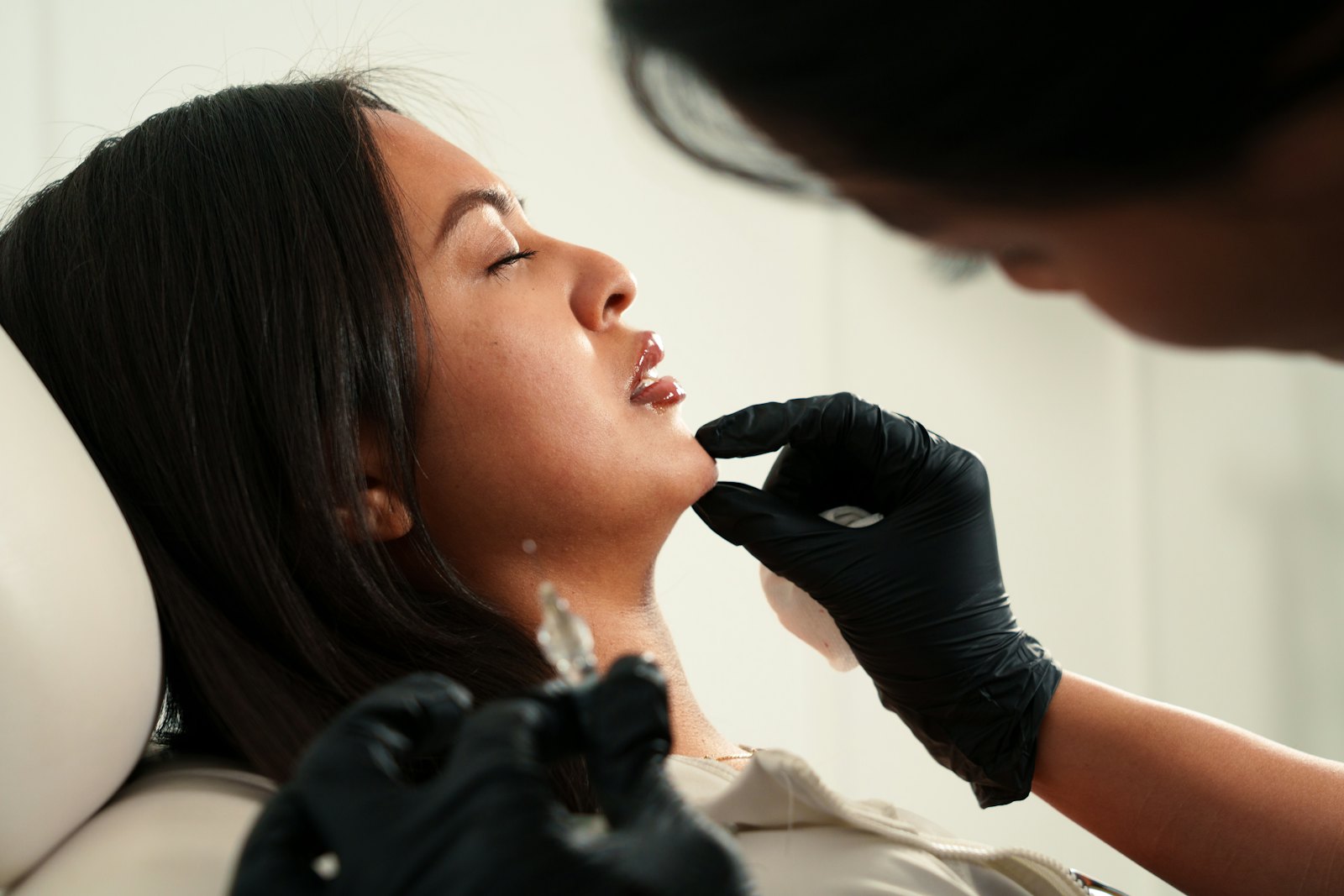
Areas are marked on the face and body map. Product and batch stay linked to the session, not to a sheet you have to track down
At the two-month follow-up, you know what was done, and the recall starts from there.
Outcomes and complications
If something happens, there’s where to write it down
Bruising, nodule, vascular occlusion: twelve coded entries, with severity and outcome. Linked to the session that caused them, not a free-text note.
A consent form lists the risks; if one occurs and it’s not written anywhere, in a dispute you’re missing exactly half the proof.
Try it here. Select what happened: the line that ends up in the medical record appears below, with its code.
The list is closed: you select, you don’t write. That’s why you can later search for “how many vascular occlusions I’ve had,” and why no one can infer a complication for you.
Become a AdverseEvent FHIR linked to the session that originated it. ⛔ You choose the severity: the software does not infer it. And the pharmacovigilance report remains your act: here, you prepare the content, nothing is transmitted.
Facial analysis
Before and after, side by side.
Two photographs from the same medical record, side by side at the same size, with a warning if the pose changed and the comparison isn’t valid. There’s also the face’s shape in 3D, to rotate together with the patient.
At the six-month follow-up, the comparison isn’t from memory: it’s your two shots, with the date below, and your written assessment alongside.
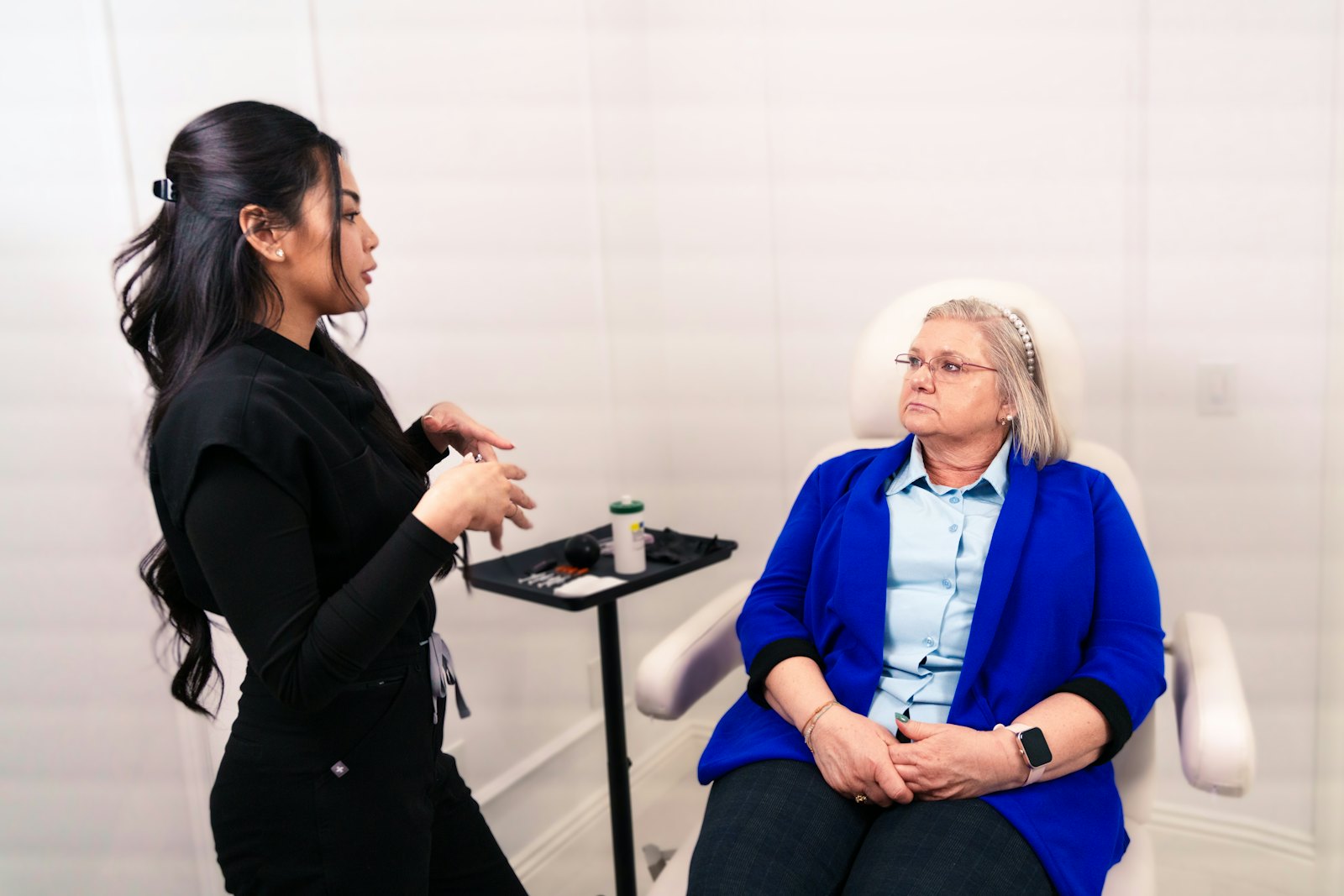
Practice
Schedule, patients, follow-ups
Ordinary things done right: calendar, search by tax code, recall reminders. Without leaving the medical record
One place only. The schedule and the medical record stop being two separate programs.
Clinical photos
Before and after leaves your phone
Photos are taken in the app and remain encrypted, tied to the session and the patient. They don’t go to your camera roll, don’t end up in an automatic backup, and aren’t shared by mistake
A photo of a patient’s face is health data. Losing it is a breach that must be reported, not just an inconvenience
The seal
Una cartella si contesta dicendo che è stata riscritta
It’s the easiest argument a lawyer can use, and with a paper record or a Word file it works: no one can prove when that line was actually written
In Fibonacci, every write carries the digital fingerprint of the previous one. These fingerprints form a chain, and the database refuses to modify or delete already closed links. Changing a comma from six months ago means breaking all subsequent links, and the break is visible.
What matters: anyone can perform the check, not just us. The verifier is a public page, no registration required. It holds as evidence precisely because it works even against us.
The chain proves that a document hasn’t been altered after being written. It’s not a qualified electronic signature: that will come, and until it does, we won’t mention it anywhere.
CHAIN OF DIGITAL FINGERPRINTS · MEDICAL RECORD 4471
- Record opened09:31:04
a41f…9c2e
- Medical history saved09:38:52
e71b…ba2f
- Consent signed09:47:19
9f2c…08d7
- Session recorded10:15:33
3d80…41aa
Modifying the 09:38 link breaks the next three. The check detects it and shows which ones.
How to verify
We don’t ask you to take our word for it
The verifier is public
Anyone can upload a document and verify its fingerprint. Without an account, and even against us.
Verify a documentContracts are read first
Data processing, sub-processors, security measures. Online, not behind a form
Read the documentsLet’s talk about what’s not here
Qualified signature and compliant archiving aren’t active, and they’re not in the price list.
What’s missingLegal validity
Data stays in Italy, and the proof is next to every line
Data in Italy
Verifiable now
The medical record, photographs, and backups are on Italian infrastructure, within the European Union. Not on U.S. clouds, and with no replicas outside the EU.
Proof Check the registry yourself: a ‘whois’ query on the site’s address returns ARUBA-NET, Aruba S.p.A., country IT. The full supply chain is in the sub-processors list.
CheckNo intermediaries
Verifiable now
Between your browser and our server, there’s no one else: no content delivery network, no third-party proxy, no externally managed application firewall. No non-European entities in the data path.
Proof The domain resolves directly to the infrastructure’s address: a DNS query shows this, and anyone can verify it, even against us.
CheckCE marking: from 2029, and no one has it yet
Not yet enforceable
The European Health Data Space regulation will make CE marking mandatory for electronic health records. Today, it can’t be applied: the Commission’s implementing acts are missing.
Proof Reg. (EU) 2025/327, Arts. 39 and 41, applicable from March 26, 2027, and March 26, 2029, for priority categories. Be wary of anyone claiming compliance already today.
Check
Pricing
Three plans, no surprises
Pricing per practice, VAT excluded. Data migration and training included. You can cancel anytime, and your data leaves with you.
SOLO
One physician, one practice
- Complete medical record, unlimited patients
- Aesthetic consent forms catalog
- Patient signature in-studio
- Facial analysis and 3D mapping
- Encrypted clinical photos
- Access audit trail
- Calendar and reminders
STUDIO
Up to five operators
- Everything included in Solo
- Dictated medical history during consultation
- Shared calendar
- Role-based permissions
- Anomalous access alerts
- Same-day support
CLINIC
Multiple locations or more than five operators
- Everything included in Studio
- Multiple locations, single calendar
- Location-based permissions
- Scheduled exports
- Onboarding and migration contact
The tough questions
The ones you’d ask
If an answer seems evasive, let us know. We’ll rewrite it
All questionsI have ten years of patient records elsewhere. Do I lose them?
No. We import patient records and history from a file exported from your current system, and migration is included. If your provider doesn’t export anything, we’ll tell you before you sign.
If you shut down tomorrow, where do my data go?
They’re yours: you’re the data controller, we process data on your behalf. You can export everything whenever you want, in a format readable without us. It’s in the contract, not just a verbal promise.
How long does it take to learn?
You’ll complete a full initial consultation on the first day. Practice setup and initial training are included in the activation.
Do I need an internet connection? What if the line goes down?
Yes, you do. If it goes down, you can’t open a new medical record. That’s the trade-off of a service that stores data on our servers. In return: backups, encryption, and a broken laptop won’t cost you anything.
Are patient data used to train AI?
No, and it’s stated in contracts with model providers, which you’ll find on the sub-processors page.
Your question
The one we didn’t anticipate
If the answer isn’t in these pages, it’ll say so instead of making it up.
The next step
Half an hour, and you’ll see if it works for you
This isn’t a sales call. We’ll show you the product using your own procedures, and we’ll also tell you where it’s not a good fit.
- Who calls
- A person who built the product, not a salesperson.
- What you need
- Knowing what procedures you perform and what management system you currently use.
- What we don’t do
- No persistent follow-ups. If you don’t reply, we won’t contact you again.